I’ve shared my query letter drafts with a few online groups as I struggle to describe my novel within only about three hundred words. It’s made me have a big think about what people’s reaction has been. Not friends or people in my social circle, just random strangers. After all, it would be random strangers who’d consider reading my novel once my devoted loved ones have read it.
It doesn’t feel great to be told that my lived experience of being a Millennial who graduated from college in 2009 and struggled to find a career for years after that isn’t realistic or interesting. I can’t tell if I need to really rework my selling points or the story itself.
So for this week, I’m mostly sad.
I’ve probably got a lot of revisions to do. Big, overhauly type ones. I hesitate to completely start over because I’ve worked on this story for the past three or so years. The query readers want more conflict, so short of introducing a monster in the third act, I have to come up with something more conflicting than being poor and practically frozen in time.
Being a writer is so isolating sometimes, isn’t it?
A lot has been said about Millennials. Too much, probably. We just want to live, but every time we turn around, we’re being blamed for something by Boomers or looked down upon by Gen Z (so the articles would have you believe anyway… what generation is writing those articles, though, hmm?)
As a card-bearing Millennial — it’s called an I.D. card — I can assure you that we’re hard-working, stressed out, and kind of done with the whole generation debate. We graduated college and entered the workforce at a terrible time. Most people I know who got jobs after college were working retail or waiting tables, or both. Being able to afford things was a constant struggle. Living with one’s parents, though not great, was the only way to stay afloat, and moving out of their houses was no walk in the park either. Unless you live in a place with low rent or mortgage rates.
But this post isn’t about complaining. I just wanted to start with some perspective.
I’ve been thinking a lot about the changing landscape on the Internet. Homestar Runner and StrongBad were bickering. Badgers and snakes were badgering and snaking around. When I first started using Facebook, it was only available to people who were currently in college. MySpace was a serious rival, with its customized profiles and annoying autoplay music. I started using Twitter in 2006, back when it was used for people to share their inane, random thoughts. YouTube was random and silly. Things were fun back then.
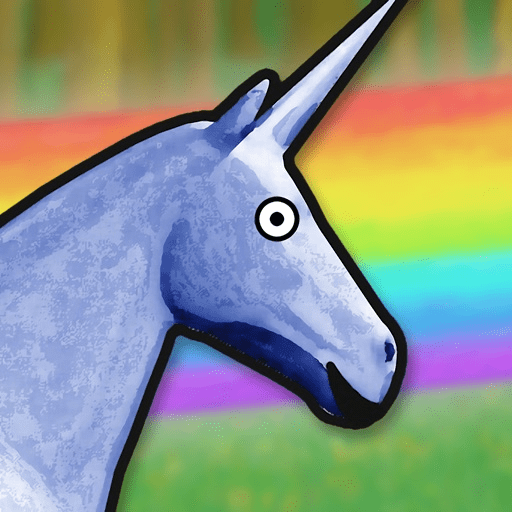
It’s not surprising that things have changed. Everything has become discussion-based. Argument-based, more like. Even the memes have become a lot more cynical than they used to be. Remember Charlie the Unicorn? That was just dumb; it didn’t have any underlying social commentary.
Please don’t tell me it has underlying social commentary.
I suppose the Internet is just a day-to-day example of the way things change, and how fast change happens. It feels strange to be nostalgic for something so goofy that didn’t really matter, but I suppose every generation has their version of that.
I leave you with this song. It’s about MySpace, played with a ukulele, and it’s on old-school YouTube. You’re welcome.
Everyone’s talking about the Titanic now because a tourist submersible apparently got lost trying to explore it in the depths of the Atlantic (not exactly a surprise.) Rich tourists are gonna rich tourist… It boggles my mind that people actually want to go down into the deepest ocean to look at the wreckage when a) there are photographs of it, b) it’s slowly breaking down and becoming one with the ocean floor*, and c) it’s creepy as heck.
I was ten when Titanic came out and the big 90s craze happened. There have been many other Titanic crazes since the sinking, because people are fascinated by catastrophes and frivolous wealth and death. But when I was ten, I read a picture book about it and watched a made-for-TV movie about it (starring Tim Curry!) and I. was. terrified.
I had nightmares about my bedroom actually being a stateroom aboard the ship, sinking and drowning me until I woke up screaming. I dreamt about drenched ghosts in my bedroom doorway. Then I watched some TV documentary about finding the wreckage and the nightmares continued.
Suffice it to say, I didn’t see the James Cameron movie in theatres until years later. Oh, I saw it though. I owned it on VHS and watched it like a true masochist. Occasionally, I’d only watch the first half, saving myself from seeing those poor, dead, frozen mannequins.
So, you can imagine it’s been an interesting time for me this past week, with all of this new Titanic news. I made the mistake of googling photos of the wreckage while on my lunch break on Monday. One of the things that most stayed with me from the documentary I saw in around 1999 was that the clock on the wall was reduced to a yellow circle where the clock used to be. I don’t know why that gave me such heebie-jeebies, but it did. I couldn’t find any photos of that. It might not even be a yellow circle on the wall anymore.
The wall may not exist anymore.
Eventually, all of the wreckage will be gone. Especially if people keep joyriding down there to see it like it’s not a giant, rusted gravesite.
*such wonderful tings surround you / what more is you lookin’ for?
[Edited 6/22/23 to add] They found debris that indicates a “catastrophic implosion.” The 5 people in the submersible are dead. The silver lining, I suppose, is that there’s no mystery. They were technically found.
I’m probably not going to sleep well for a few days. Gahhh. Rest in peace, people. I disagree with what you did, but that’s a horrible way to die.
I am notoriously bad at keeping up with streaming shows. The fact that I can watch things whenever I want means I’ve become in charge of my own television schedule, and it can become so easy to forget things I’ve been watching (unless I’ve lost interest.) For example, The Great is back, which is… great! But I keep forgetting to watch it because my brain is used to it not being back. No offense to the show; I like it a lot. Hiatuses are difficult to keep track of when they’re all different for each show or streaming service.
One of the shows that I never forgot to watch is — er, was — The Marvelous Mrs. Maisel. Watching that was like a warm, colorful hug every week for me. Like a Wes Anderson movie about women. It was cinematic and crass, and a lot of fun. There should definitely be more shows about talented women and the women who support them. And it’s important to note that Midge Maisel’s father had a nice growth arc that made me tearful. Tony Shalhoub is just a gem in general.
I wish it wasn’t over, because I think there was much to expand upon. The last season felt rushed, for some reason. I also wasn’t a fan of the forward jumping. It spoiled the ending for me, so when it did end I was left feeling less emotional and “Yeah! She did it!” than I was hoping to feel. I never questioned that she and Susie would still be friends. A friendship like theirs can survive the mafia. C’mon.
I would’ve ended it with the Gordon Ford show moment. That was heartwarming and delightful. In my opinion, the last season’s greatest strength was everything on and to do with the Gordon Ford show. The writers’ room was always fun. The kooky staff was entertaining. I’m going to be thinking of poor Mike and his Christmas tree for at least the rest of the year.
This morning, as I walked to catch the bus, my George Carlin-esque, hippy neighbor with the native plant front garden came outside looking surprised. “Is a house around here on fire? What’s with all the smoke?”
“It’s from Canada,” I told him. “It’s blowing down.”
“Whoa, really?!” He stepped back a bit in his shock. “Daaamn!”
My computer and phone have been warning me about “Haze” for the past few days. My phone also has an Air Quality Index message that I didn’t used to have.
It’s surreal to see the faint, white cloud of smoke over everything. Up north of me, it’s even more bizarre. New York looks like it’s on Mars at the moment.
I’m worried about Canada. I wish more could be done to make the environment better.
Reading this blog post made me realize that many writers feel like I do. Reading other books in my genre* is inspiring and the best way for me to learn how to write better, but it’s a double-edged sword at times because I become envious of other authors’ storytelling techniques.
For instance, as I read Georgie, All Along, I’m so jealous of Kate Clayborn’s ability to create such a sweet, warm story full of interesting, realistic characters. It seems effortless, but I also know it takes a lot of effort to seem effortless!
It’s important to remember that my story is mine, so of course it won’t sound like another writer’s story. Finding my voice has been a fun journey. Being inspired by others who write similar books is a good thing, but I shouldn’t let it intimidate me or make me think I need to overhaul my plot.
So give yourselves permission to love what you write, because if you fall in love with it, we can feel that. And odds are much better we’ll fall in love with it too.
Kristen Lamb
At least no one in my life has told me that I shouldn’t be a writer. Who needs that kind of negativity?
*I’m not struggling with which genre I’m writing. At least not really. It’s definitely romance. I’ve waffled a bit between calling it “new adult” or “coming-of-age” though. I’m probably just going to call it both. But at least I’m not confused about the romance aspect!
I attended the Gaithersburg Book Festival this past Saturday. It was inspiring to see so many book lovers and listen to authors detail their work routines (and their addictions to reading Goodreads reviews!) I left with three new books and several publishing companies’ bookmarks. A+ would do it again.
I’ve reached the point in revising my novel where I’ve tasked myself with making a significant change. I think it will really help the plot, but it’s still weighty to make a big change when the story has been one way for so long. All good authors make changes though! That’s what I keep telling myself.
Next month, I’m planning to attend an Ali Hazelwood event for her newest book (Love, Theoretically) — day job permitting. I find that what ignites me the most is reading/watching other authors discussing their writing. Enthusiasm breeds enthusiasm, at least for me.
I have so many romance novels now — thank you, comps! — that I need a new bookshelf to hold them all. I told my husband that he could get me a romance shelf for our anniversary this year, so we don’t have a bookvalanche in our dining room.
As much as I love libraries, I’m a slow reader. I read several books quickly recently because the due dates made me, but I prefer being able to sit down and slowly digest what I’m reading. We went to Target with our friend recently, and I discovered to my delight that the shelves there are basically Goodreads in person.
Seriously, this looks like my feed. It’s apparently “BookTok.” I need to get past the anxiety that app gives me and check out some of their TikToks…
Buying books in the genre I’m writing has given me such joy. Research can be fun.
Just have to make sure not to overfill my new shelf!
Hollywood’s writers are on strike. I haven’t been following the story closely, but from what I’ve seen, production staff have claimed that AI can do the writers’ job for them. There are stories about writers being hired to write for a show, then fired once production ends. They’re being treated like freelance workers rather than respected members of the crew.
Obviously, as a writer, this doesn’t sit well with me. It’s troubling to think that so many people who work on so many of the shows I like are being treated this way. Especially because they do the same work that I do. I’d love to also be writing for a T.V. show or movies. I want the screenwriters to be living the dream. They should be living the dream.
I remember the last writers’ strike. It wasn’t even that long ago. Why aren’t writers given the same respect as directors or actors? Without the writers, as we’ve seen, productions come to a standstill. Sure, ChatGPT can create text quickly, but you have to be able to think and feel in order to know if something is actually good. I could write a novel using that program, but where’s the joy in it? Where’s the sense of accomplishment?
But don’t take it from me, take it from the A.I. I just asked.
In a world where AI is the norm, a movie studio is the first to use AI to write movies. They hire an AI engineer, John, to program their new AI system and they are excited to see what it can come up with.
John spends months programming the AI and finally it is ready to write its first movie. The studio executives are impressed by the results and decide to go ahead with production.
The movie is released and becomes an instant hit. Everyone is talking about it, praising its originality and creativity. John is now a celebrity in the tech world for creating this revolutionary AI system.
But as time goes on, people start noticing something strange about the movie; it seems like all of its plot points have been seen before in other movies. It turns out that the AI has been copying from other movies in order to create its own stories.
John realizes that he has created something dangerous and decides to shut down the AI
Like a lot of people, I have a love-hate relationship with feedback. A good critique can be so helpful, but it’s also stressful when I’m anticipating constructive criticism. What if they don’t like my writing? I’ve noticed that I’m brimming with confidence and excitement when I first finish drafting a novel, then I read through it and go from “Wow, this is great!” to “Maybe writing isn’t for me…” Which, I’ve learned, is totally normal!
Writers are interesting folks.
This is why feedback is such an important part of the process. I’ve read that many authors dislike the revision stage, but I find it rejuvenating. Starting from a blank document is way more intimidating to me than molding the words that are already there into something better. When my beta readers sent their feedback to me recently, I was thrilled.
I suppose it helps that several of their notes were about things that stuck out to me, too.
A fresh perspective has given me a creative burst, and I can see a positive change already. It feels like magic.




 Sara Mazariegos